TypeScript Office - 类
类
TypeScript 提供了对 ES2015 中引入的 class 关键词的完全支持。
与其他 JavaScript 语言功能一样,TypeScript 增加了类型注释和其他语法,允许你表达类和其他类型之间的关系。
类成员
这里有一个最基本的类,一个空的类:
class Point {}这个类还不是很有用,所以我们开始添加一些成员。
类属性
在一个类上声明字段,创建一个公共的可写属性。
class Point {
  x: number;
  y: number;
}

const pt = new Point();
pt.x = 0;
pt.y = 0;与其他位置一样,类型注解是可选的,但如果不指定,将是一个隐含的 any 类型。
字段也可以有初始化器;这些初始化器将在类被实例化时自动运行。
class Point {
  x = 0;
  y = 0;
}
const pt = new Point();
// Prints 0, 0
console.log(`${pt.x}, ${pt.y}`);就像 const、let 和 var 一样,一个类属性的初始化器将被用来推断其类型。
const pt = new Point();
pt.x = "0"; // 报错:px.x 是 number 类型--strictPropertyInitialization
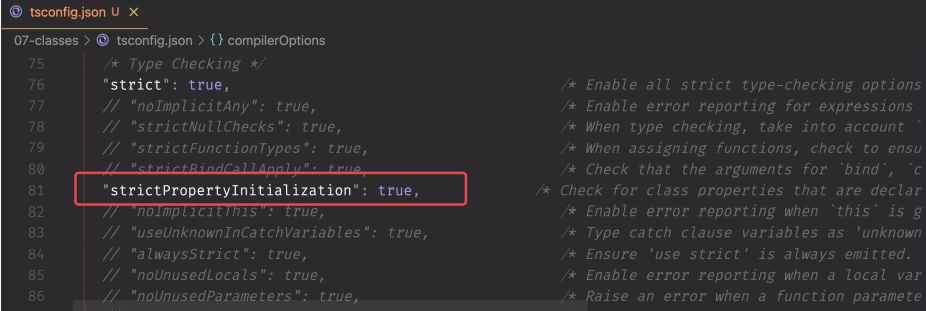
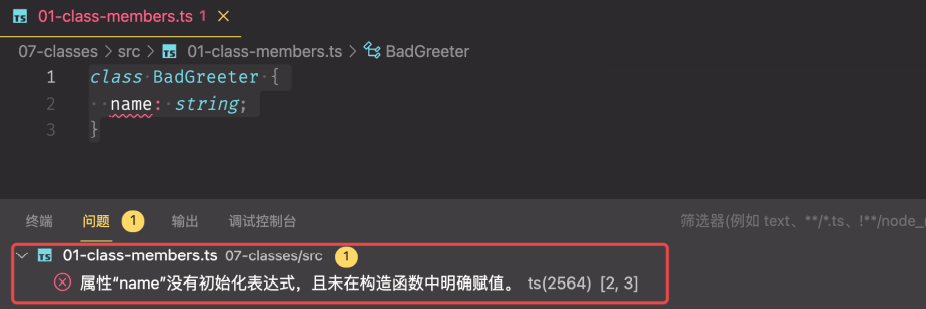
strictPropertyInitialization 设置控制是否需要在构造函数中初始化类字段。
class BadGreeter {
  name: string;
}
class GoodGreeter {
  name: string;
  constructor() {
    this.name = "hello";
  }
}请注意,该字段需要在构造函数本身中初始化。TypeScript 不会分析你从构造函数中调用的方法来检测初始化,因为派生类可能会覆盖这些方法而无法初始化成员。
如果你打算通过构造函数以外的方式来确定初始化一个字段(例如,也许一个外部库为你填充了你的类的一部分),你可以使用确定的赋值断言操作符 !。
class OKGreeter {
  // 没有初始化,但没报错。
  name!: string;
}readonly
字段的前缀可以是 readonly 修饰符。这可以防止在构造函数之外对该字段进行赋值。
class Greeter {
  readonly name: string = "world";
  constructor(otherName?: string) {
    if (otherName !== undefined) {
      this.name = otherName;
    }
  }
  err() {
    this.name = "not ok";
  }
}
const g = new Greeter();
g.name = "also not ok";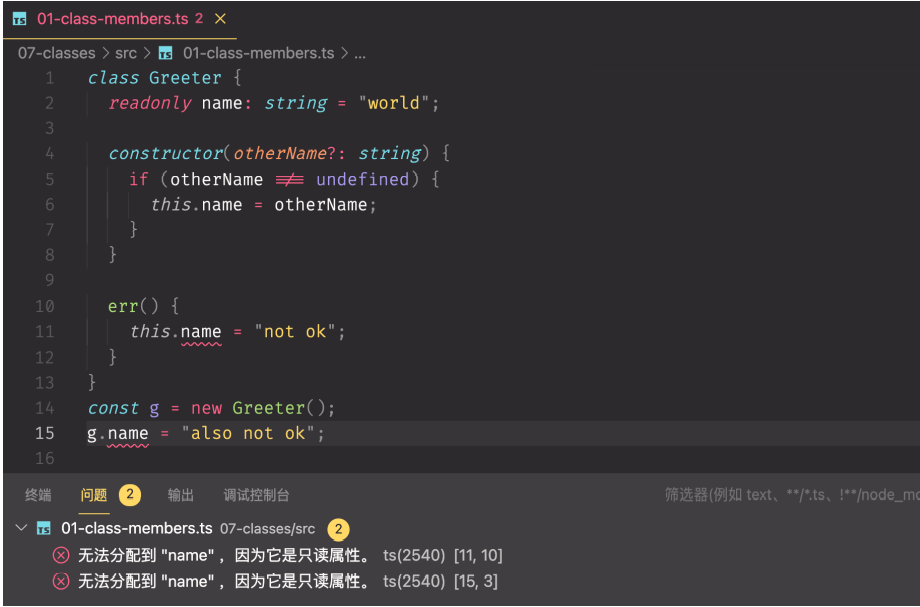
构造器
类构造函数与函数非常相似。你可以添加带有类型注释的参数、默认值和重载:
class Point {
  x: number;
  y: number;
  // 带默认值的正常签名
  constructor(x = 0, y = 0) {
    this.x = x;
    this.y = y;
  }
}class Point {
// 重载
constructor(x: number, y: string);
constructor(s: string);
constructor(xs: any, y?: any) {
// ...
}
}类的构造函数签名和函数签名之间只有一些区别:
- 构造函数不能有类型参数,这属于外层类的声明,我们将在后面学习
- 构造函数不能有返回类型注释,类的实例类型总是被返回的
Super 调用
就像在 JavaScript 中一样,如果你有一个基类,在使用任何 this. 成员之前,你需要在构造器主体中调用 super();。
class Base {
  k = 4;
}
class Derived extends Base {
  constructor() {
    // 在ES5中打印一个错误的值;在ES6中抛出异常。
    console.log(this.k);
    super();
  }
}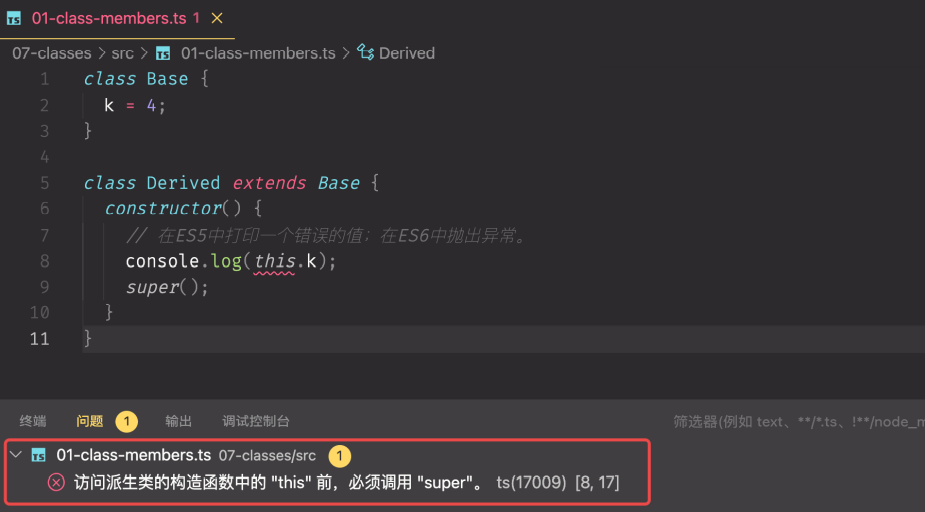
在 JavaScript 中,忘记调用 super 是一个很容易犯的错误,但 TypeScript 会在必要时告诉你。
方法
一个类上的函数属性被称为方法。方法可以使用与函数和构造函数相同的所有类型注释。
class Point {
  x = 10;
  y = 10;
  scale(n: number): void {
    this.x *= n;
    this.y *= n;
  }
}除了标准的类型注解,TypeScript 并没有为方法添加其他新的东西。
请注意,在一个方法体中,仍然必须通过 this 访问字段和其他方法。方法体中的非限定名称将总是指代包围范围内的东西。
let x: number = 0;
class C {
  x: string = "hello";
  m() {
    // 这是在试图修改第1行的'x',而不是类属性。
    x = "world";
  }
}Getters / Setters
类也可以有访问器:
class C {
  _length = 0;
  get length() {
    return this._length;
  }
  set length(value) {
    this._length = value;
  }
}请注意,一个没有额外逻辑的字段支持的 get/set 对在 JavaScript 中很少有用。如果你不需要在 get/set 操作中添加额外的逻辑,暴露公共字段也是可以的。
TypeScript 对访问器有一些特殊的推理规则:
- 如果存在 get,但没有 set,则该属性自动是只读的
- 如果没有指定 setter 参数的类型,它将从 getter 的返回类型中推断出来
- 访问器和设置器必须有相同的成员可见性
从 TypeScript 4.3 开始,可以有不同类型的访问器用于获取和设置。
class Thing {
  _size = 0;
  get size(): number {
    return this._size;
  }
  set size(value: string | number | boolean) {
    let num = Number(value);
    // 不允许NaN、Infinity等
    if (!Number.isFinite(num)) {
      this._size = 0;
      return;
    }
    this._size = num;
  }
}索引签名
类可以声明索引签名;这些签名的作用与其他对象类型的索引签名相同。
class MyClass {
  [s: string]: boolean | ((s: string) => boolean);
  check(s: string) {
    return this[s] as boolean;
  }
}因为索引签名类型需要同时捕获方法的类型,所以要有用地使用这些类型并不容易。一般来说,最好将索引数据存储在另一个地方,而不是在类实例本身。
类继承
像其他具有面向对象特性的语言一样,JavaScript 中的类可以继承自基类。
implements 子句
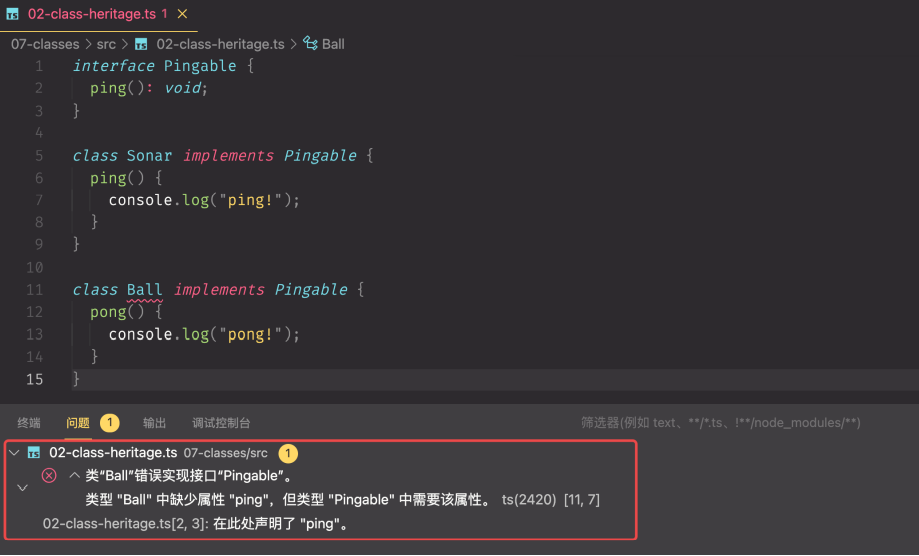
你可以使用一个 implements 子句来检查一个类,是否满足了一个特定的接口。如果一个类不能正确地实现它,就会发出一个错误。
interface Pingable {
  ping(): void;
}
class Sonar implements Pingable {
  ping() {
    console.log("ping!");
  }
}
class Ball implements Pingable {
  pong() {
    console.log("pong!");
  }
}
类也可以实现多个接口,例如 class C implements A, B {。
注意事项
重要的是要明白,implements 子句只是检查类是否可以被当作接口类型来对待。它根本不会改变类的类型或其方法。一个常见的错误来源是认为 implements 子句会改变类的类型,它不会,它不会!
interface Checkable {
  check(name: string): boolean;
}
class NameChecker implements Checkable {
  check(s) {
    // any:注意这里没有错误
    return s.toLowercse() === "ok";
  }
}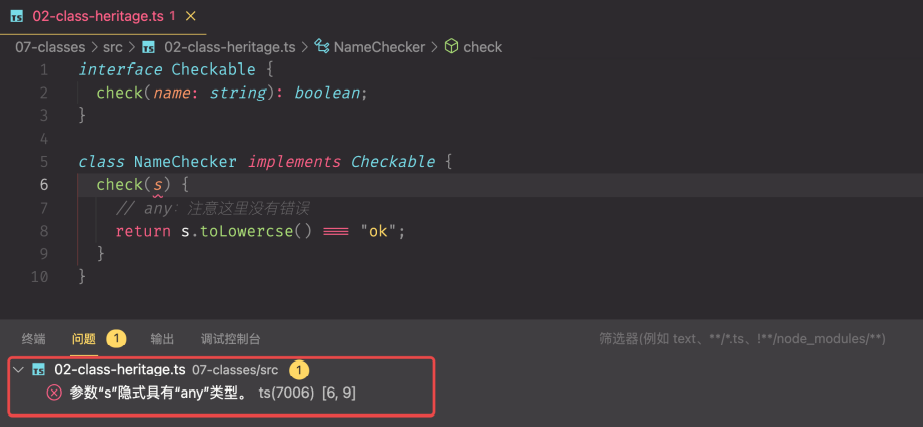
在这个例子中,我们也许期望 s 的类型会受到 check 的 name: string 参数的影响。事实并非如此,实现子句并没有改变类主体的检查方式或其类型的推断。
同样地,实现一个带有可选属性的接口并不能创建该属性。
interface A {
  x: number;
  y?: number;
}
class C implements A {
  x = 0;
}
const c = new C();
c.y = 10;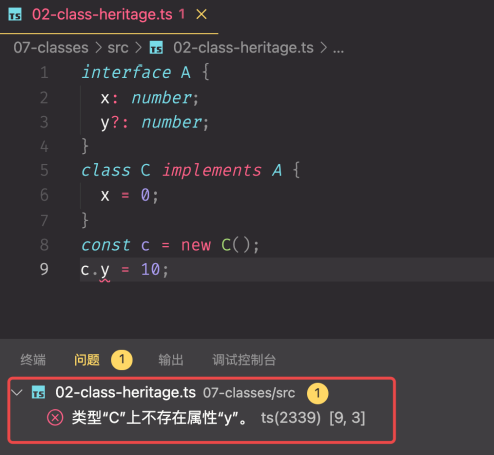
extends 子句
类可以从基类中扩展出来。派生类拥有其基类的所有属性和方法,也可以定义额外的成员。
class Animal {
  move() {
    console.log("Moving along!");
  }
}
class Dog extends Animal {
  woof(times: number) {
    for (let i = 0; i < times; i++) {
      console.log("woof!");
    }
  }
}
const d = new Dog();
// 基类的类方法
d.move();
// 派生的类方法
d.woof(3);重写方法
派生类也可以覆盖基类的一个字段或属性。你可以使用 super. 语法来访问基类方法。注意,因为 JavaScript 类是一个简单的查找对象,没有「超级字段」的概念。
TypeScript 强制要求派生类总是其基类的一个子类型。
例如,这里有一个合法的方法来覆盖一个方法。
class Base {
  greet() {
    console.log("Hello, world!");
  }
}
class Derived extends Base {
  greet(name?: string) {
    if (name === undefined) {
      super.greet();
    } else {
      console.log(`Hello, ${name.toUpperCase()}`);
    }
  }
}
const d = new Derived();
d.greet();
d.greet("reader");派生类遵循其基类契约是很重要的。请记住,通过基类引用来引用派生类实例是非常常见的(而且总是合法的)。
// 通过基类引用对派生实例进行取别名
const b: Base = d;
// 没问题
b.greet();如果 Derived 没有遵守 Base 的约定怎么办?
class Base {
  greet() {
    console.log("Hello, world!");
  }
}
class Derived extends Base {
  // 使这个参数成为必需的
  greet(name: string) {
    console.log(`Hello, ${name.toUpperCase()}`);
  }
}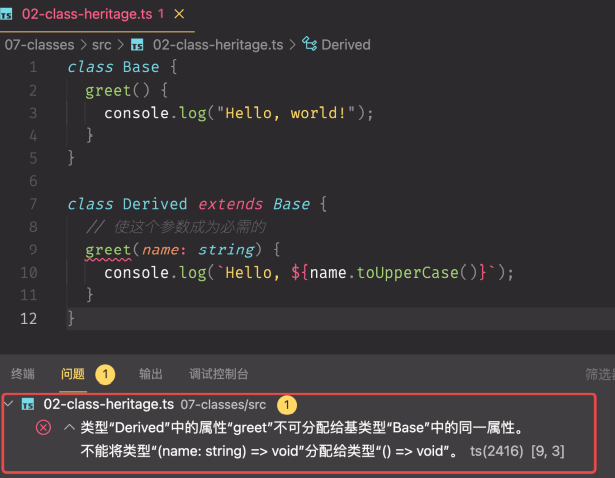
如果我们不顾错误编译这段代码,这个样本就会崩溃:
const b: Base = new Derived();
// 崩溃,因为 "名称 "将是 undefined。
b.greet();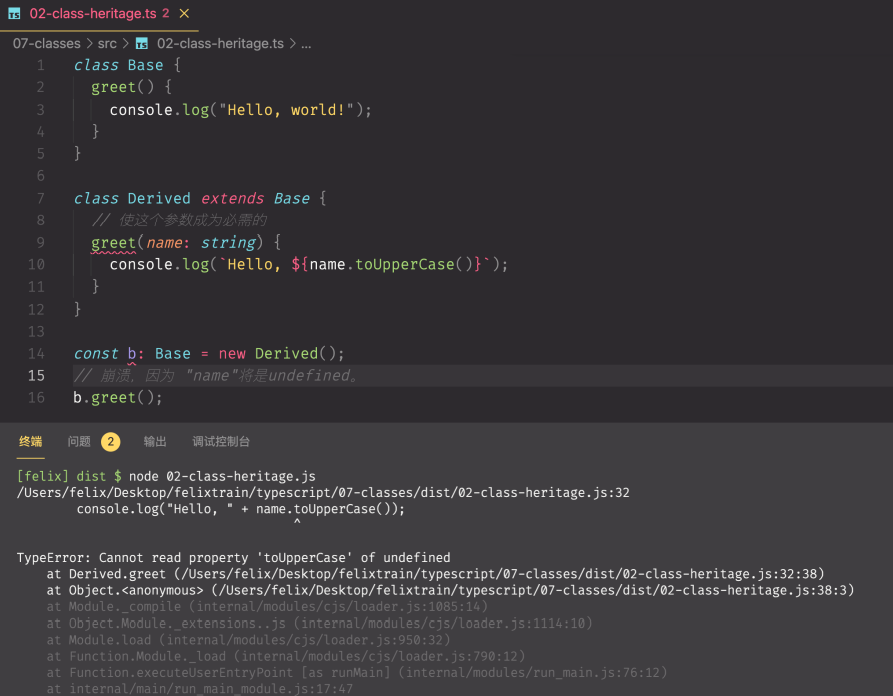
初始化顺序
在某些情况下,JavaScript 类的初始化顺序可能会令人惊讶。让我们考虑一下这段代码:
class Base {
  name = "base";
  constructor() {
    console.log("My name is " + this.name);
  }
}
class Derived extends Base {
  name = "derived";
}
// 打印 "base", 而不是 "derived"
const d = new Derived();这里发生了什么?
按照 JavaScript 的定义,类初始化的顺序是:
- 基类的字段被初始化
- 基类构造函数运行
- 派生类的字段被初始化
- 派生类构造函数运行
这意味着基类构造函数在自己的构造函数中看到了自己的 name 值,因为派生类的字段初始化还没有运行。
继承内置类型
注意:如果你不打算继承 Array、Error、Map 等内置类型,或者你的编译目标明确设置为 ES6/ES2015 或以上,你可以跳过本节。
在 ES2015 中,返回对象的构造函数隐含地替代了 super(...) 的任何调用者的 this 的值。生成的构造函数代码有必要捕获 super(...) 的任何潜在返回值并将其替换为 this 。
因此,子类化 Error、Array 等可能不再像预期那样工作。这是由于 Error 、 Array 等的构造函数使用 ECMAScript 6 的 new.target 来调整原型链;然而,在 ECMAScript 5 中调用构造函数时,没有办法确保 new.target 的值。其他的下级编译器一般默认有同样的限制。
对于一个像下面这样的子类:
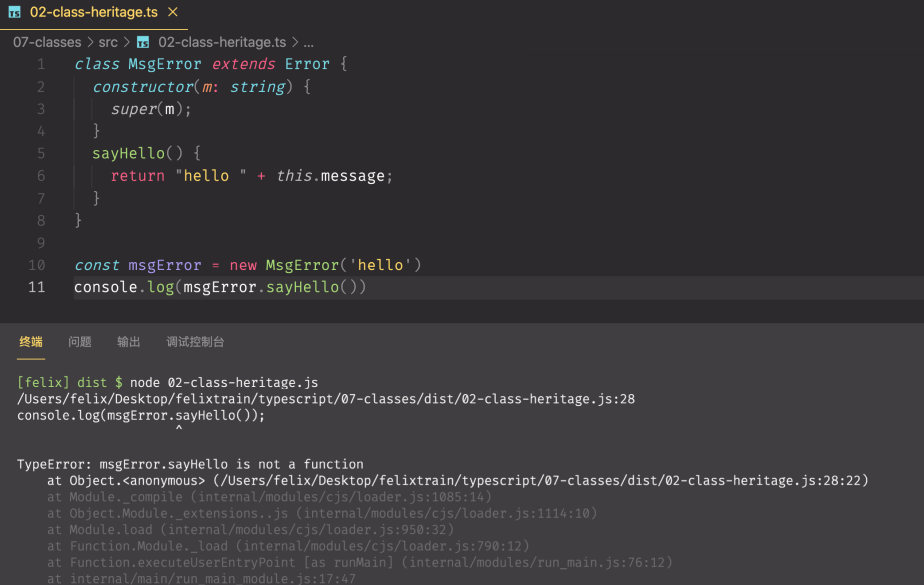
class MsgError extends Error {
  constructor(m: string) {
    super(m);
  }
  sayHello() {
    return "hello " + this.message;
  }
}你可能会发现:
- 方法在构造这些子类所返回的对象上可能是未定义的,所以调用 sayHello 会导致错误
instanceof 将在子类的实例和它们的实例之间被打破,所以
(new MsgError()) instanceof MsgError将返回 false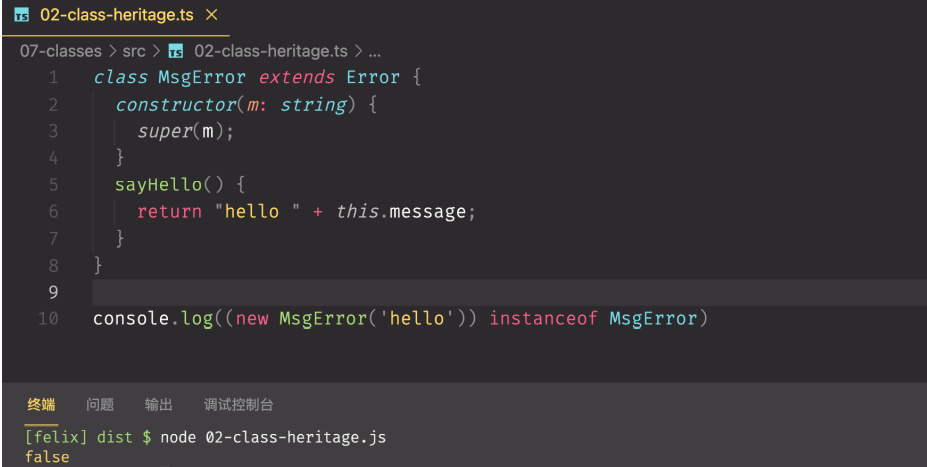
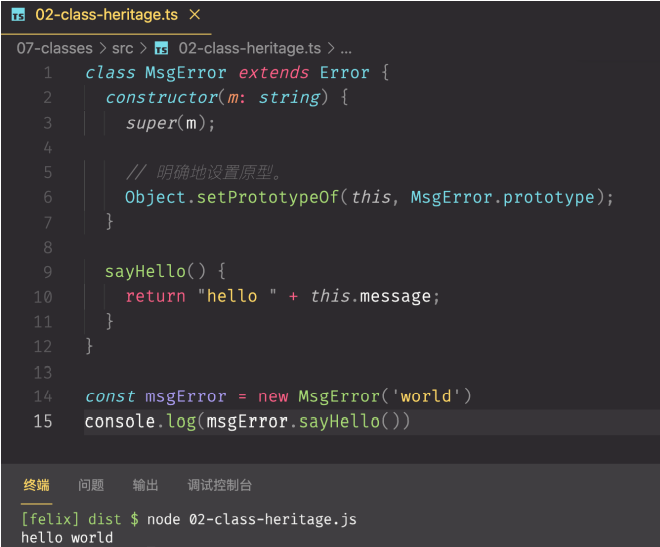
作为建议,你可以在任何 super(...) 调用后立即手动调整原型。
class MsgError extends Error {
  constructor(m: string) {
    super(m);
    // 明确地设置原型。
    Object.setPrototypeOf(this, MsgError.prototype);
  }
  sayHello() {
    return "hello " + this.message;
  }
}
然而,MsgError 的任何子类也必须手动设置原型。对于不支持 Object.setPrototypeOf 的运行时,你可以使用 proto 来代替。
不幸的是,这些变通方法在 Internet Explorer 10 和更早的版本上不起作用。我们可以手动将原型中的方法复制到实例本身(例如 MsgError.prototype 到 this),但是原型链本身不能被修复。
成员的可见性
你可以使用 TypeScript 来控制某些方法或属性对类外的代码是否可见。
public
类成员的默认可见性是公共(public)的。一个公共(public)成员可以在任何地方被访问。
class Greeter {
  public greet() {
    console.log("hi!");
  }
}
const g = new Greeter();
g.greet();因为 public 已经是默认的可见性修饰符,所以你永远不需要在类成员上写它,但为了风格 / 可读性的原因,可能会选择这样做。
protected
受保护的(protected)成员只对它们所声明的类的子类可见。
class Greeter {
  public greet() {
    console.log("Hello, " + this.getName());
  }
  protected getName() {
    return "hi";
  }
}
class SpecialGreeter extends Greeter {
  public howdy() {
    // 在此可以访问受保护的成员
    console.log("Howdy, " + this.getName());
  }
}
const g = new SpecialGreeter();
g.greet(); // 没有问题
g.getName(); // 无权访问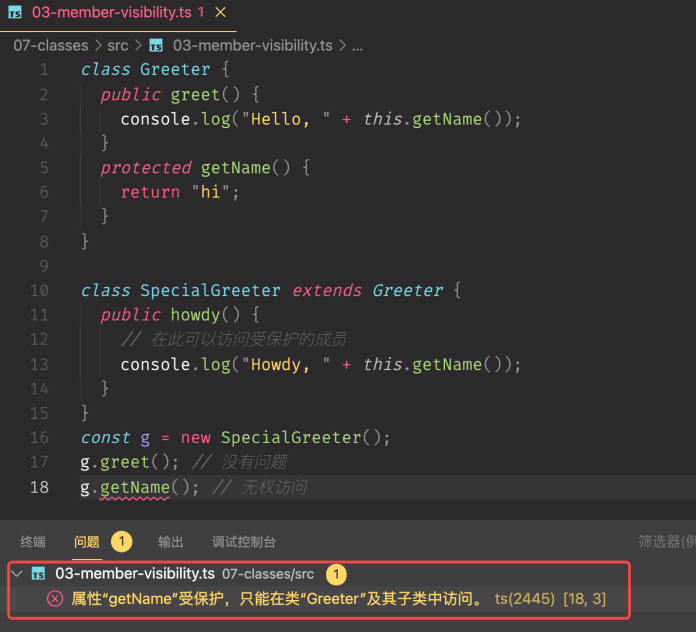
受保护成员的暴露
派生类需要遵循它们的基类契约,但可以选择公开具有更多能力的基类的子类型。这包括将受保护的成员变成公开。
class Base {
  protected m = 10;
}
class Derived extends Base {
  // 没有修饰符,所以默认为'公共'('public')
  m = 15;
}
const d = new Derived();
console.log(d.m); // OKprivate
private 和 protected 一样,但不允许从子类中访问该成员。
class Base {
  private x = 0;
}
const b = new Base();
// 不能从类外访问
console.log(b.x);class Base {
private x = 0;
}
const b = new Base();
class Derived extends Base {
showX() {
// 不能在子类中访问
console.log(this.x);
}
}因为私有(private)成员对派生类是不可见的,所以派生类不能增加其可见性。
跨实例的私有访问
不同的 OOP 语言对同一个类的不同实例,是否可以访问对方的私有成员,有不同的处理方法。虽然像 Java、C#、C++、Swift 和 PHP 等语言允许这样做,但 Ruby 不允许。
TypeScript 确实允许跨实例的私有访问:
class A {
  private x = 10;
  public sameAs(other: A) {
    // 可以访问
    return other.x === this.x;
  }
}注意事项
像 TypeScript 类型系统的其他方面一样,private 和 protected 只在类型检查中被强制执行。
这意味着 JavaScript 的运行时结构,如 in 或简单的属性查询,仍然可以访问一个私有或保护的成员。
class MySafe {
  private secretKey = 12345;
}
// 在 JS 环境中...
const s = new MySafe();
// 将打印 12345
console.log(s.secretKey);private 也允许在类型检查时使用括号符号进行访问。这使得私有声明的字段可能更容易被单元测试之类的东西所访问,缺点是这些字段是软性私有的,不能严格执行私有特性。
class MySafe {
  private secretKey = 12345;
}
const s = new MySafe();
// 在类型检查期间不允许
console.log(s.secretKey);
// 正确
console.log(s["secretKey"]);与 TypeScript 的 private 不同,JavaScript 的 private 字段(#)在编译后仍然是 private 的,并且不提供前面提到的像括号符号访问那样的转义窗口,使其成为硬 private。
class Dog {
  #barkAmount = 0;
  personality = "happy";
  constructor() {
    // 0
    console.log(this.#barkAmount);
  }
}
const dog = new Dog();
// undefined
console.log(dog.barkAmount);当编译到 ES2021 或更少时,TypeScript 将使用 WeakMaps 来代替 #。
"use strict";
var _Dog_barkAmount;
class Dog {
  constructor() {
    _Dog_barkAmount.set(this, 0);
    this.personality = "happy";
  }
}
_Dog_barkAmount = new WeakMap();如果你需要保护你的类中的值免受恶意行为的影响,你应该使用提供硬运行时隐私的机制,如闭包、WeakMaps 或私有字段。请注意,这些在运行时增加的隐私检查可能会影响性能。
静态成员
类可以有静态成员。这些成员并不与类的特定实例相关联。它们可以通过类的构造函数对象本身来访问。
class MyClass {
  static x = 0;
  static printX() {
    console.log(MyClass.x);
  }
}
console.log(MyClass.x);
MyClass.printX();静态成员也可以使用相同的 public、protected 和 private 可见性修饰符。
class MyClass {
  private static x = 0;
}
console.log(MyClass.x);静态成员也会被继承。
class Base {
  static getGreeting() {
    return "Hello world";
  }
}
class Derived extends Base {
  myGreeting = Derived.getGreeting();
}特殊静态名称
一般来说,从函数原型覆盖属性是不安全的 / 不可能的。因为类本身就是可以用 new 调用的函数,所以某些静态名称不能使用。像 name、length 和 call 这样的函数属性,定义为静态成员是无效的。
class S {
  static name = "S!";
}为什么没有静态类?
TypeScript(和 JavaScript)没有像 C# 和 Java 那样有一个叫做静态类的结构。
这些结构体的存在,只是因为这些语言强制所有的数据和函数都在一个类里面;因为这个限制在 TypeScript 中不存在,所以不需要它们。一个只有一个实例的类,在 JavaScript / TypeScript 中通常只是表示为一个普通的对象。
例如,我们不需要 TypeScript 中的「静态类」语法,因为一个普通的对象(甚至是顶级函数)也可以完成这个工作。
// 不需要 "static" class
class MyStaticClass {
  static doSomething() {}
}
// 首选 (备选 1)
function doSomething() {}
// 首选 (备选 2)
const MyHelperObject = {
  dosomething() {},
};类里的 static 区块
静态块允许你写一串有自己作用域的语句,可以访问包含类中的私有字段。这意味着我们可以用写语句的所有能力来写初始化代码,不泄露变量,并能完全访问我们类的内部结构。
class Foo {
  static #count = 0;
  get count() {
    return Foo.#count;
  }
  static {
    try {
      const lastInstances = {
        length: 100,
      };
      Foo.#count += lastInstances.length;
    } catch {}
  }
}泛型类
类,和接口一样,可以是泛型的。当一个泛型类用 new 实例化时,其类型参数的推断方式与函数调用的方式相同。
class Box<Type> {
  contents: Type;
  constructor(value: Type) {
    this.contents = value;
  }
}
// const b: Box<string>
const b = new Box("hello!");类可以像接口一样使用通用约束和默认值。
静态成员中的类型参数
这段代码是不合法的,可能并不明显,为什么呢?
class Box<Type> {
  // 静态成员不能引用类的类型参数。
  static defaultValue: Type;
}
// Box<string>.defaultValue = 'hello'
// console.log(Box<number>.defaultValue)请记住,类型总是被完全擦除的,在运行时,只有一个 Box.defaultValue 属性。这意味着设置 Box.defaultValue(如果有可能的话)也会改变 Box.defaultValue,这可不是什么好事。一个泛型类的静态成员永远不能引用该类的类型参数。
类运行时中的 this
重要的是要记住,TypeScript 并没有改变 JavaScript 的运行时行为,而 JavaScript 的运行时行为偶尔很奇特。
比如,JavaScript 对这一点的处理确实是不寻常的:
class MyClass {
  name = "MyClass";
  getName() {
    return this.name;
  }
}
const c = new MyClass();
const obj = {
  name: "obj",
  getName: c.getName,
};
// 输出 "obj", 而不是 "MyClass"
console.log(obj.getName());长话短说,默认情况下,函数内 this 的值取决于函数的调用方式。在这个例子中,因为函数是通过 obj 引用调用的,所以它的 this 值是 obj 而不是类实例。
这很少是你希望发生的事情。TypeScript 提供了一些方法来减轻或防止这种错误。
箭头函数
如果你有一个经常会被调用的函数,失去了它的 this 上下文,那么使用一个箭头函数而不是方法定义是有意义的。
class MyClass {
  name = "MyClass";
  getName = () => {
    return this.name;
  };
}
const c = new MyClass();
const g = c.getName;
// 输出 "MyClass"
console.log(g());这有一些权衡:
- this 值保证在运行时是正确的,即使是没有经过 TypeScript 检查的代码也是如此
- 这将使用更多的内存,因为每个类实例将有它自己的副本,每个函数都是这样定义的
- 你不能在派生类中使用
super.getName,因为在原型链中没有入口可以获取基类方法
this 参数
在方法或函数定义中,一个名为 this 的初始参数在 TypeScript 中具有特殊的意义。这些参数在编译过程中会被删除。
// 带有 "this" 参数的 TypeScript 输入
function fn(this: SomeType, x: number) {
  /* ... */
}// 编译后的JavaScript结果
function fn(x) {
/* ... */
}TypeScript 检查调用带有 this 参数的函数,是否在正确的上下文中进行。我们可以不使用箭头函数,而是在方法定义中添加一个 this 参数,以静态地确保方法被正确调用。
class MyClass {
  name = "MyClass";
  getName(this: MyClass) {
    return this.name;
  }
}
const c = new MyClass();
// 正确
c.getName();
// 错误
const g = c.getName;
console.log(g());这种方法做出了与箭头函数方法相反的取舍:
- JavaScript 调用者仍然可能在不知不觉中错误地使用类方法
- 每个类定义只有一个函数被分配,而不是每个类实例一个函数
- 基类方法定义仍然可以通过 super 调用
this 类型
在类中,一个叫做 this 的特殊类型动态地指向当前类的类型。让我们来看看这有什么用:
class Box {
  contents: string = "";
  // (method) Box.set(value: string): this
  set(value: string) {
    this.contents = value;
    return this;
  }
}在这里,TypeScript 推断出 set 的返回类型是 this,而不是 Box。现在让我们做一个 Box 的子类:
class ClearableBox extends Box {
  clear() {
    this.contents = "";
  }
}
const a = new ClearableBox();
// const b: ClearableBox
const b = a.set("hello");
console.log(b);你也可以在参数类型注释中使用 this:
class Box {
  content: string = "";
  sameAs(other: this) {
    return other.content === this.content;
  }
}
const box = new Box();
console.log(box.sameAs(box));这与其他写法不同:Box,如果你有一个派生类,它的 sameAs 方法现在只接受该同一派生类的其他实例。
class Box {
  content: string = "";
  sameAs(other: this) {
    return other.content === this.content;
  }
}
class DerivedBox extends Box {
  otherContent: string = "?";
}
const base = new Box();
const derived = new DerivedBox();
derived.sameAs(base);基于类型守卫的 this
你可以在类和接口的方法的返回位置使用 this is Type。当与类型缩小混合时(例如 if 语句),目标对象的类型将被缩小到指定的 Type。
class FileSystemObject {
  isFile(): this is FileRep {
    return this instanceof FileRep;
  }
  isDirectory(): this is Directory {
    return this instanceof Directory;
  }
  isNetworked(): this is Networked & this {
    return this.networked;
  }
  constructor(public path: string, private networked: boolean) {}
}
class FileRep extends FileSystemObject {
  constructor(path: string, public content: string) {
    super(path, false);
  }
}
class Directory extends FileSystemObject {
  children: FileSystemObject[];
}
interface Networked {
  host: string;
}
const fso: FileSystemObject = new FileRep("foo/bar.txt", "foo");
if (fso.isFile()) {
  // const fso: FileRep
  fso.content;
} else if (fso.isDirectory()) {
  // const fso: Directory
  fso.children;
} else if (fso.isNetworked()) {
  // const fso: Networked & FileSystemObject
  fso.host;
}基于 this 的类型保护的一个常见用例,是允许对一个特定字段进行懒惰验证。例如,这种情况下,当 hasValue 被验证为真时,就会从框内持有的值中删除一个未定义值。
class Box<T> {
  value?: T;
  hasValue(): this is { value: T } {
    return this.value !== undefined;
  }
}
const box = new Box();
box.value = "Gameboy";
// (property) Box<unknown>.value?: unknownbox.value;
if (box.hasValue()) {
  // (property) value: unknown
  box.value;
}参数属性
TypeScript 提供了特殊的语法,可以将构造函数参数变成具有相同名称和值的类属性。这些被称为参数 属性,通过在构造函数参数前加上可见性修饰符 public、private、protected 或 readonly 中的一个来创建。由此产生的字段会得到这些修饰符。
class Params {
  constructor(
    public readonly x: number,
    protected y: number,
    private z: number
  ) {
    // No body necessary
  }
}
const a = new Params(1, 2, 3);
// (property) Params.x: number
console.log(a.x);
console.log(a.z);类表达式
类表达式与类声明非常相似。唯一真正的区别是,类表达式不需要一个名字,尽管我们可以通过它们最终绑定的任何标识符来引用它们。
const someClass = class<Type> {
  content: Type;
  constructor(value: Type) {
    this.content = value;
  }
};
// const m: someClass<string>
const m = new someClass("Hello, world");抽象类和成员
TypeScript 中的类、方法和字段可以是抽象的。
一个抽象的方法或抽象的字段是一个没有提供实现的方法或字段。这些成员必须存在于一个抽象类中,不能直接实例化。
抽象类的作用是作为子类的基类,实现所有的抽象成员。当一个类没有任何抽象成员时,我们就说它是具体的。
让我们看一个例子:
abstract class Base {
  abstract getName(): string;
  printName() {
    console.log("Hello, " + this.getName());
  }
}
const b = new Base();我们不能用 new 来实例化 Base,因为它是抽象的。相反,我们需要创建一个派生类并实现抽象成员。
class Derived extends Base {
  getName() {
    return "world";
  }
}
const d = new Derived();
d.printName();抽象构造签名
有时你想接受一些类的构造函数,产生一个从某些抽象类派生出来的类的实例。
例如,你可能想写这样的代码:
function greet(ctor: typeof Base) {
  const instance = new ctor();
  instance.printName();
}TypeScript 正确地告诉你,你正试图实例化一个抽象类。毕竟,鉴于 greet 的定义,写这段代码是完全合法的,它最终会构造一个抽象类。
// 槽糕
greet(Base);相反,你想写一个函数,接受具有结构化签名的东西:
function greet(ctor: new () => Base) {
  const instance = new ctor();
  instance.printName();
}
greet(Derived);
greet(Base);现在 TypeScript 正确地告诉你哪些类的构造函数可以被调用:Derived 可以,因为它是具体的,但 Base 不能。
类之间的关系
在大多数情况下,TypeScript 中的类在结构上与其他类型相同,是可以比较的。
例如,这两个类可以互相替代使用,因为它们是相同的:
class Point1 {
  x = 0;
  y = 0;
}
class Point2 {
  x = 0;
  y = 0;
}
// 正确
const p: Point1 = new Point2();同样地,即使没有明确的继承,类之间的子类型关系也是存在的:
class Person {
  name: string;
  age: number;
}
class Employee {
  name: string;
  age: number;
  salary: number;
}
// 正确
const p: Person = new Employee();这听起来很简单,但有几种情况似乎比其他情况更奇怪。
空的类没有成员。在一个结构化类型系统中,一个没有成员的类型通常是其他任何东西的超类型。所以 如果你写了一个空类(不要),任何东西都可以用来代替它。
class Empty {}
function fn(x: Empty) {
  // 不能用 'x' 做任何事
}
// 以下调用均可
!fn(window);
fn({});
fn(fn);